

CWO (retd) S. McNabb
Adventure Training you may ask, what is that? Ironically, that seems to be a common question when the topic is brought up. Yes - I know, the soldiers know what adventure training is, but the level of attention adventure training receives in many units, does lead soldiers to answer in that fashion. I wouldn’t publish that units are being given a failing grade when it comes to adventure training, because they are not. However, many units do need to do better at dedicating the time, effort, and support towards this training initiative. I know some units are busy and do not have the time, the budget or available personnel to commit towards this type of collective training and professional development, but it is an integral part of a unit’s operational training.
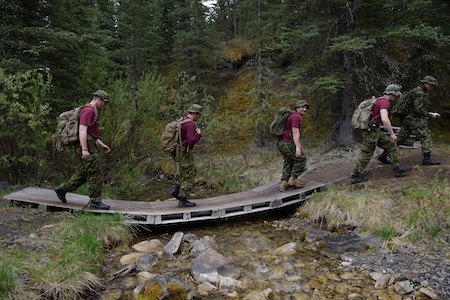 All kidding aside, DAOD 5031-10 states that adventure training complements both individual and collective training for CAF members, and provides the necessary training and development to support the CAF mission. Similarly, a common theme in CAO 23-02, where it amplifies the DAOD and adds this is possible by enhancing physical and moral courage, fitness, endurance, inspires and builds on initiative and teamwork, and prepares CAF members to withstand the rigorous conditions of operations.
The aim is clear that adventure training is delivered to empower military members to overcome physical, psychological and emotional challenges, as would be experienced during exposure to an unfamiliar outdoor environment. When you look at it through the scope of individual and collective training, the benefits are massive as it provides and promotes robust and resilient members by exposing them to elements of risk, and strengthen mental and physical fitness.
In my military career, I participated in probably five adventure training exercises, and I can honestly say one of the principal educating tools used was the experiential education and learning process. This is where the learner shapes their knowledge, skill and value from direct exposure and experience to an activity. Learning by doing opposed to learning theory in the classroom. I’m not saying that I wasn’t taught what I needed to know before participating in scuba diving, sailing or canoeing adventures which I participated in, but the focus was on reinforcing those taught skills through experience.
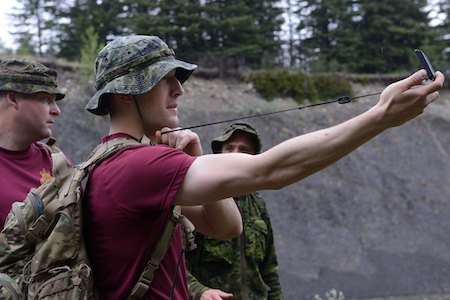
With imagination and good planning, adventure training can be conducted with relatively little expense, yet remain a superb way to forge group cohesion, self-confidence and provide group leadership opportunities for junior members to demonstrate their planning ability, initiative and fitness. In the framework of army training, few training events can so adequately address these points as adventure training can when conducted in challenging circumstances. Adventure training helps individuals to transcend the gap between training and education. It is a valuable professional development tool which will help individuals succeed, and the experience gained by individuals will also reinforce past training and education.
All opportunities to conduct adventure training should be taken where possible and Commanding Officers and their key subordinate commanders and NCMs should seek every opportunity to plan and conduct such training. Adventure training is an integral part of operational training.
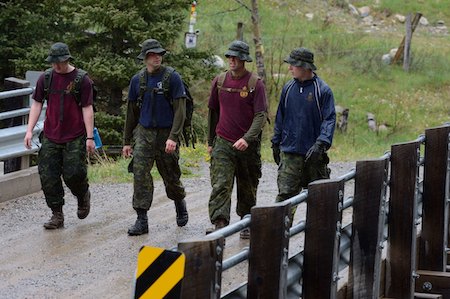 When considering a proposal, it must be well planned and have adequate oversight, have well defined objectives with formal orders and instructions being issued. It will require a clearly defined chain of command, have a suitably experienced expedition leader, and contain the elements to challenge participants both physically and mentally with a level of risk, all while ensuring that safety remains a priority throughout. Once these items have been considered, in conjunction with both DAOD 5031-10 and CAO 23-02, a proposal may be submitted for approval.
Although, adventure training is not typically conducted to maintain core competencies, it might be argued that adventure training is as significant as any other training opportunity. It is designed to build on the warrior spirit of all participants and enhance the esprit de corps within a unit. Adventure training is stimulating and dynamic training, that when carefully planned will set the conditions for soldiers to utilize the skills learned, and relationships developed to enable cohesiveness across future training events, all in a way that cannot be achieved in a normal military training event. The concept of adventure training is to gain maximum training value by working with practical and transferable skills that are taught and enhanced in an informal and challenging way. Adventure training opportunities will undoubtedly provide quality training experience and rewarding mental and physical challenges, while also serving as motivation to improve soldier fitness. Those participating will walk away from an adventurous opportunity with more confident in themselves and others while experiencing an exciting and unique opportunity.
If you’ve got a good idea for adventure training, I encourage you discuss this chain of command, peers and subordinates, and submit a proposal. If you’ve ever been the one to ask, “what is adventure training?” This is your chance to reconfigure the future of this training opportunity.