When soldiers are personally prepared and ready to meet the challenges of the CA, they demonstrate competency and confidence in their professional skills and affairs, and need little to no time to ramp-up prior to heading out the door on a deployment or mission. They are self-assured and eager to interact with others seeking opportunities to learn, grow, lead, and assist. Soldiers and officers who have the health and physical ability to rapidly adjust wherever they operate are able to confidently and effectively execute their task or mission under the most gruelling of conditions. It is also important to note that the soldiers and officers who are personally ready have the capacity, agility, and drive to continually learn. They have the ability to effectively process challenging situations. They possess the strength and purpose to handle the stress and psychological and physical trauma associated with multiple deployments or tasks. Just as important, they demonstrate the ability and skills to identify soldiers who may need help. Additionally, a soldier who possesses strong personal readiness characteristics also operates from a strong moral foundation, sustained by the Army ethics and values, and the warrior spirit. A professionally prepared and ready soldier is clearly capable of building social confidence and competence, building and maintaining positive relationships with their team, unit and others. They have healthy family relationships, and they ensure their family can take care of themselves and others in their absence.
At this point, it should come as no surprise, mental resilience is a person's ability to respond effectively to stress, pressure, risk and adversity, all of which we face in our Army career. Our mission, is to develop our soldiers psychological capability and capacity to respond effectively to the circumstances they will undoubtably face in their lives. The physical and mental changes we feel when we can’t cope with something. We often feel stress in response to situations that challenge us, and this can be a good thing. Stress can be motivating and help improve our performance if it’s managed well. But we often have to deal with stress from multiple sources such as work, home, family, health, and finances. When stress builds up or isn’t managed, it can be harmful to our health.
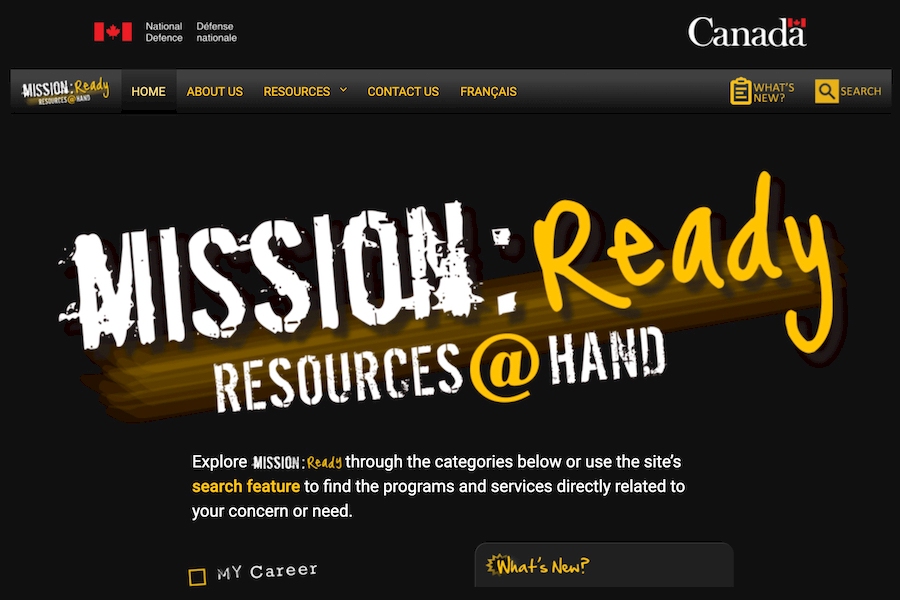
Soldiers must perform at their optimal level if the Army is to successfully meet its challenges. Leaders are charged with exemplifying the army values and holding themselves and their subordinates accountable. Training across the army must build upon army values and personal readiness. Accordingly, the primary purpose of Mission: Ready is to provide comprehensive training resources to leaders aimed at assisting them in their efforts to enhance personal readiness, resilience and performance. This increases their soldier’s overall preparedness and deployability, health, and performance right down to the lowest level.
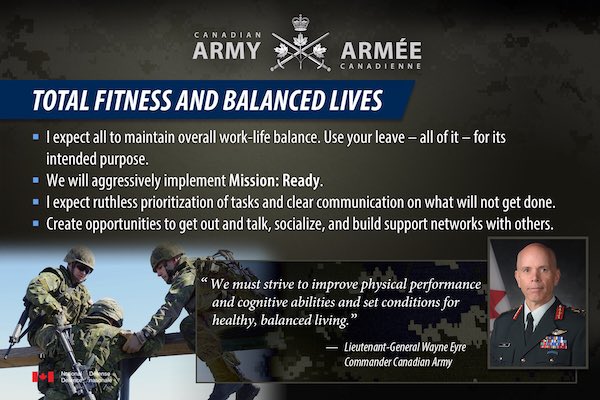
There is a Mission: Ready, leaders guide to readiness and resilience which I will link at the bottom of this article. A very useful resources for officers and NCMs. As leaders, it is imperative that we seek to enhance our resilience, as well as that of our subordinates. “Where do I start?”, you ask. It is not a daunting task, but this is why we need to develop and enhance our resilience as well. Actively engaging in leadership practices that positively encourage and motivate individuals, builds personal resilience and enhances readiness. Remember, being resilient does not mean being resistant to stress, but it does mean successfully adapting to and coping with stressful situations. It is not an inherent quality, it can be acquired through learned behaviours, thoughts and actions. Mission: Ready will fall short of the Commander CA’s intent unless headquarters at all levels – Division, Formation and Unit make the appropriate adjustments to ensure lasting culture and mindset change are adopted and incorporated in their own training and education plans.
From my standpoint, here are some observations that resilient soldiers and officers have in common, so you can learn how to be more courageous and tough when life gets hard.
Be Optimistic. Staying optimistic during dark periods can be difficult, but maintaining a hopeful outlook is an important part of resiliency. Positive thinking does not mean ignoring the problem in order to focus on a positive outcome. It means understanding that setbacks are temporary and that you have the skills and abilities to combat the challenges you face. What you are dealing with may be difficult, but it's important to remain hopeful and positive about a brighter future.
Practice Spirituality. What if you’re not religious. No problem. Much of the strength from religious activity comes from being part of a community. You don’t have to do anything you don’t believe in, but you should be part of a group that strengthens your stability. Become a part of a group that has strong beliefs, and they support one another.
Maintain Your Physical Fitness. Most resilient people have good exercise habits that keep their bodies and minds strong. The stress of exercise helps us adapt to the stress we will feel when life challenges us. Exercise adapts your body to stress. I normally use exercise to relieve stress, as physical activity produces endorphins, which is a chemical reaction in the brain that act as natural painkillers, and it also improve the ability to sleep, which in turn reduces stress.
Keep your Mind Strong. Resilient people are very often lifelong learners. They keep growing their mind, learning to learn, and adapting to new information about the world. This could be in the form of professional military education.
Cultivate Relationships. Dealing with a crisis is hard enough without having to do it alone. A strong support network can fight off feelings of isolation or helplessness in tough times. Developing a strong and supportive family network that share in challenges and the mobilization of support through social events, fun, and inclusive family days. If not readily available, being part of a group where you have a support network, as mentioned earlier under practicing spirituality.
When you connect with something bigger than yourself it’s a huge buffer against stress, whether it’s physical, emotional, social, spiritual, family or intellectual activities. It not only enriches your life; it has a positive effect on those around you. The greater the connection, the greater your resilience. To put this into perspective, when an emotional war starts to wage in your mind, the enemy will use every tool in their arsenal to weaken you, while using the knowledge gained with Mission: Ready, will put the required tools right back in your tool bag to use when necessary.
With that end in mind, the CA is providing ready and resilient capabilities to assist leaders in achieving and sustaining personal readiness and human performance through the Mission: Ready program.
As mentioned earlier, here is a link to the Mission: Ready – Leader's Guide to Readiness and Resilience https://strongproudready.ca/missionready/en/category/cap3-leaders-guide-en/
Online Resources
Also available for free are a number of online courses that may suit your needs or the needs of your soldiers. Some of those courses are listed below:
Mindfulness and Resilience to Stress at Work. Click Here
Empathy and Emotional Intelligence at Work. Click Here
'Talk to me': Managing Study, Stress, and Mental Health at University. Click Here
The Science of Well-Being. Click Here